
A Cold Reception
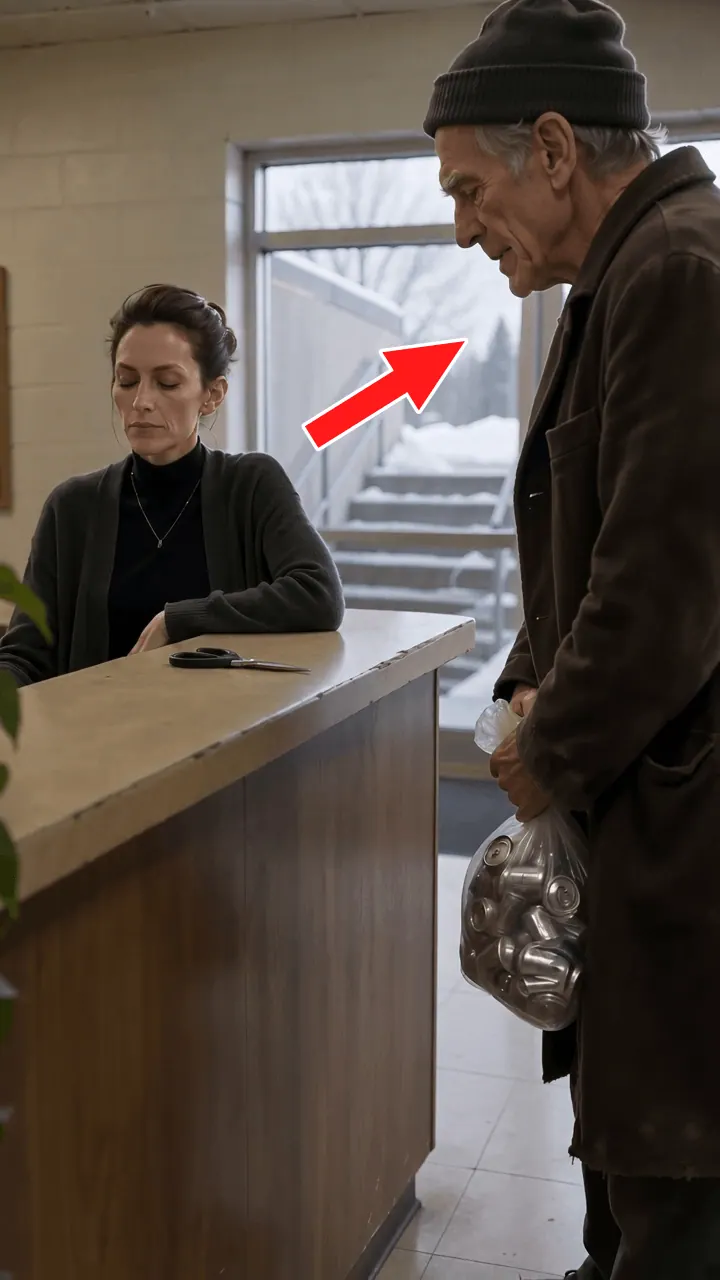
An elderly man in a faded knit cap set a clear plastic sack full of crushed aluminum cans against the front counter.
He rubbed his bare knuckles together and leaned toward the receptionist, asking to use the facility phone because the power was out across town.
The receptionist tapped her pen against a clipboard, pointed toward the hallway, and told him the phone was reserved strictly for staff.
When he asked about signing onto the registry for residents living alone, she pushed a stack of application paperwork forward and stated there was a three-month waiting period.
Before he could write his name, she placed two hands against his coat chest and shoved him toward the exit doors.
A Warm Cup Across The Table
Another visitor, an older woman wearing a thick wool scarf and a silver bird brooch, stepped between them and caught the door frame with her hand.
She told the receptionist that the room was paid for with monthly dues and walked the man directly over to a small square table.
She unscrewed the metal cap of a large thermos, set the steaming lid in front of him, and poured thick tomato soup to the brim.
She took his cold fingers and guided them around the warm metal cup before setting down a spoon.
As he swallowed the broth, he asked quiet questions about how many seniors depended on the hall and why the broken radiators had never been repaired.
She tapped her coat lapel, explaining that everyone inside had contributed their entire lives and deserved basic dignity in their later years.
When the receptionist announced closing time, the woman tore a scrap of paper, scribbled her address, and slid it into the breast pocket of his coat.
The Executive Arrives
Four days later, city evaluators sat around the main table to decide whether the failing facility would be permanently shut down.
The receptionist adjusted her blazer and presented a folder outlining broken boilers, damaged access ramps, and a lack of outside donors.
Footsteps echoed from the entryway as double doors swung open wide.
A tall man dressed in a charcoal three-piece suit entered the room, flanked by two assistants carrying leather briefcases.
He walked directly to the head of the conference table and dropped the familiar plastic sack of crushed aluminum cans onto the polished wood.
He introduced himself as Arthur, the chief executive officer of the regional charitable endowment.
He pulled a folded email from his pocket, read aloud the receptionist’s prior rejection letter calling the seniors a poor financial investment, and dismissed her on the spot.
Securing The Future
Arthur turned away from the administrative desk and walked down the center aisle toward the metal folding chairs.
He stopped before the woman who had shared her lunch, holding out a multi-million-dollar funding agreement that guaranteed the building would remain open permanently.
He laid the grant paperwork on her lap and asked her to serve as head of the newly formed oversight council.
When she asked why she was being chosen, he pointed out that she was the only person in the building who had stood up to defend a stranger.
A retired resident in the back row asked when the freezing draft in the main hall would finally stop.
Arthur unbuttoned his suit jacket, turned to the gathered residents, and stated that maintenance technicians were already downstairs working on the furnace.
The woman gathered the signed grant documents, setting her steel thermos beside the paperwork while the other residents pulled their chairs in close around the table.
Know someone who always looks out for others when nobody else will? Send them this.