
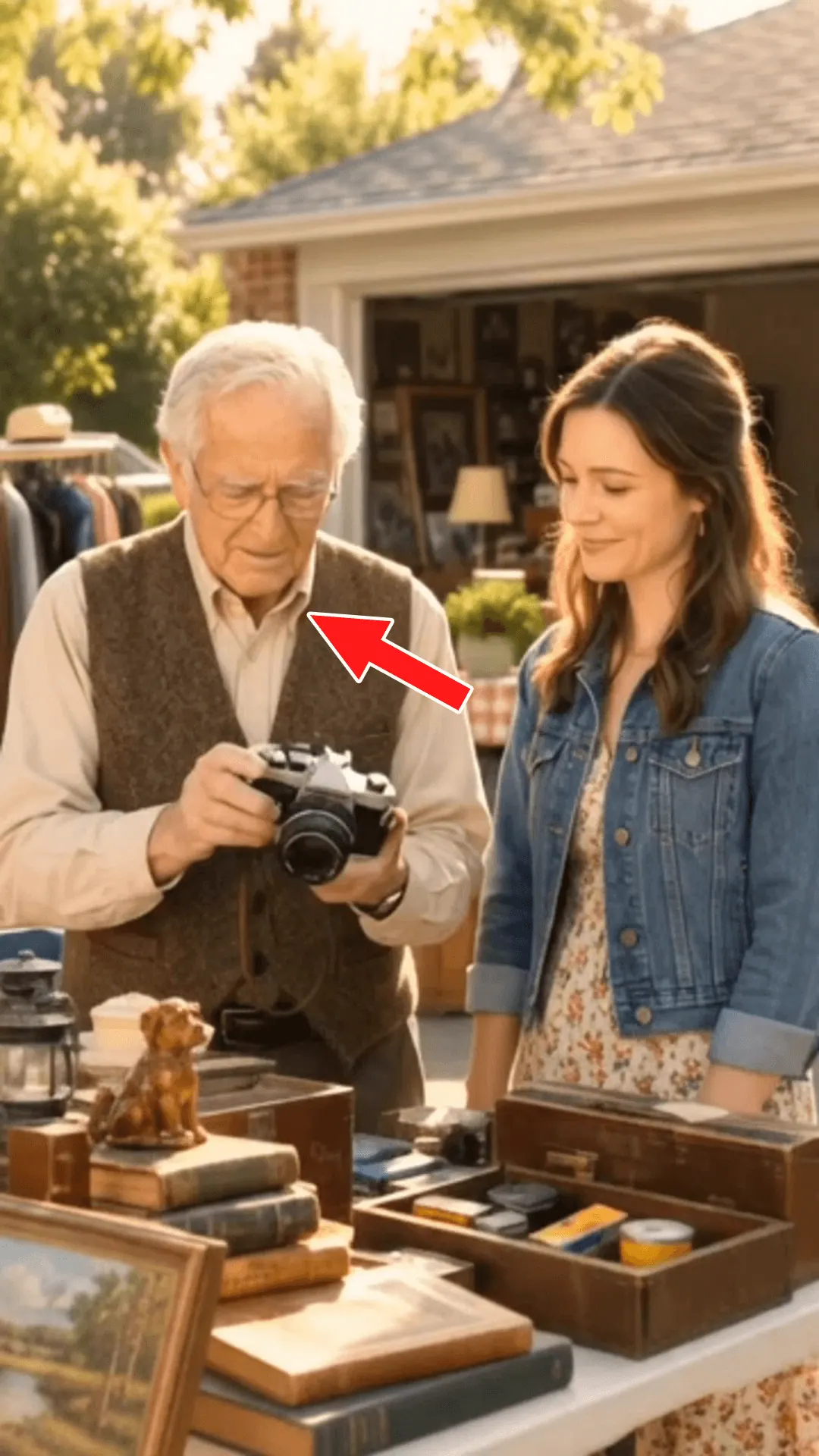
The Camera on the Folding Table
Mr. Henry turned the vintage 1970s camera over in his palms, running a thumb across the mechanical shutter release. Across the yard sale table, Clara gestured toward the cardboard boxes lining the driveway.
She explained that the metal body had spent decades resting undisturbed inside her attic. Mr. Henry peered into the small exposure counter window, his eyes narrowing behind his spectacles when he noticed the counter was not at zero.
The value was not in the glass lens or the silver casing. An unexposed roll of film remained wound around the spool inside the sealed dark compartment.
Submerged in the Red Light
Inside his basement darkroom, bathed under the dull amber glow of a safelight, Mr. Henry worked without turning on the overhead bulbs. He pried open the camera back, unhooking the delicate spool and guiding the celluloid into a developing tank.
He rocked the chemical tray gently back and forth. His fingers, stained faintly from decades of fixer and developer, held the wet paper beneath the surface as gray outlines began to solidify.
Trees and water appeared first across the white cardstock. Then, on another strip, the outline of a man in uniform emerged from the bath.
Mr. Henry hung the wet prints along a taut wire using wooden clothespins. He held a round magnifying glass to his eye, leaning close to examine the soldier holding a laughing infant against his chest.
A Name Carved into Leather
Back in his study, Mr. Henry laid the camera strap flat along the wooden desk beside a warm cup of tea. Clara leaned forward, her finger tracing a set of shallow letters pressed deep into the worn cowhide.
The inscription read ‘David Miller 1975.’ Clara looked up from the leather band, her hand rising to cover her mouth as she recognized the name of her late neighbor’s father.
She pointed down the street toward the end of the block. The man’s son lived only three houses away, completely unaware of what had been resting in the attic up the road.
A Knock at the Front Door
Mr. Henry carried a square package wrapped in brown butcher paper up the wooden steps of the porch. A young man opened the door, his eyebrows knitting together as he looked down at the unexpected parcel.
He untied the twine and folded back the paper to reveal a simple wooden frame. The young man stopped breathing for a second as his gaze locked onto the black-and-white print inside.
His fingers trembled along the edge of the wood, and his lower lip drew inward. He whispered that he had never seen his grandfather’s face before, only heard stories of the soldier who never returned from overseas.
He pulled the framed portrait tightly against his chest, tucking his chin downward as tears spilled onto the glass. Mr. Henry stood on the porch, his hands folded quietly in front of his vest, watching the young man hold the photograph against his sweater.
Later that evening, Mr. Henry sat back into the worn cushions of his leather armchair, cradling the 1970s camera in his lap while the brick wall behind him stood covered from floor to ceiling in framed black-and-white portraits.
Send this to someone who understands the true value of an old family photograph.