
The Unspoken Presence
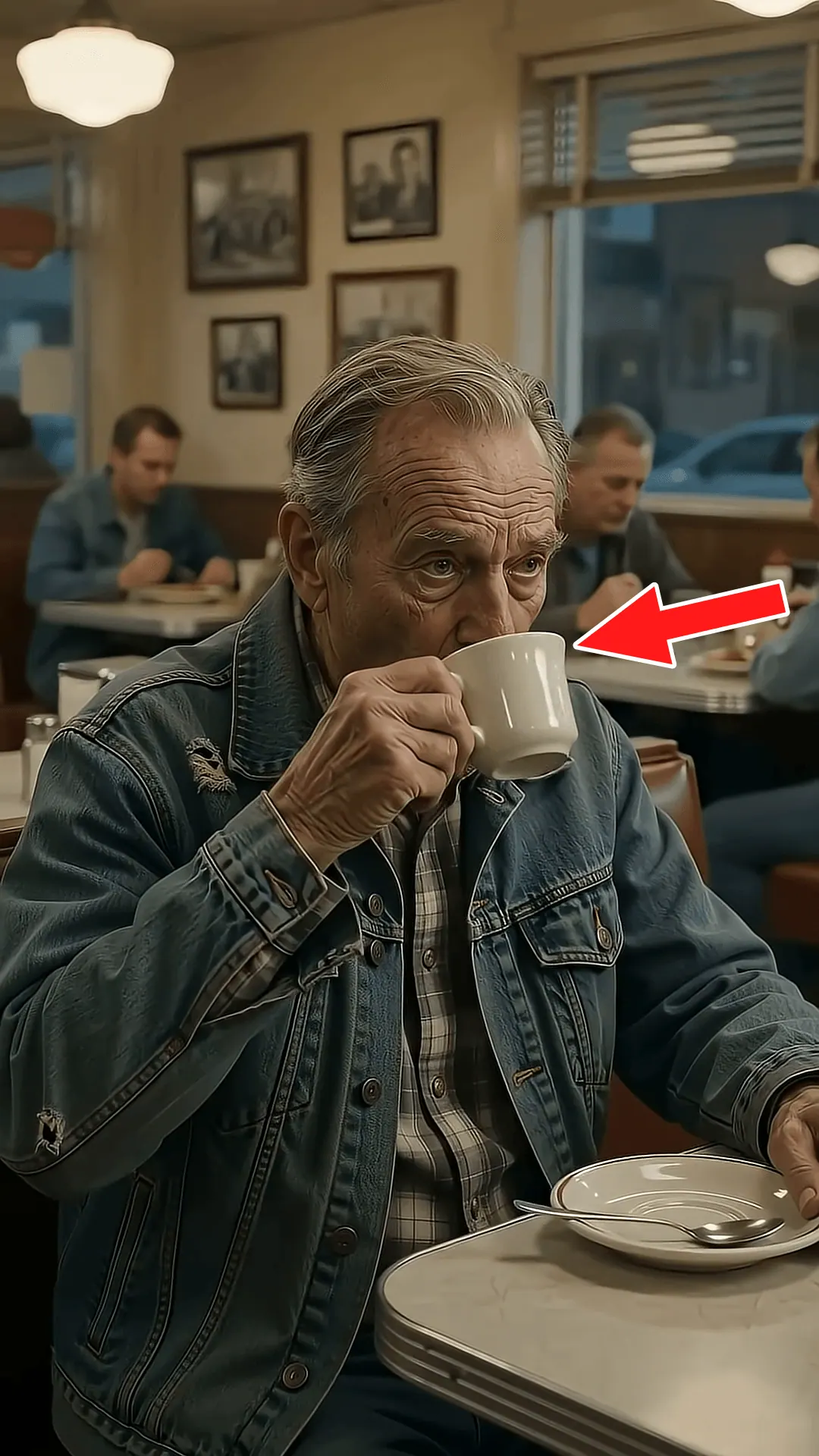
An elderly man sits alone in a red vinyl booth, his fingers curled around the handle of a white ceramic coffee mug. The diner is dimly lit, filled with the low hum of muffled conversations. He lifts the mug toward his lips, his movements slow and methodical. Outside, the bell above the door jingles as a group of men in leather vests push their way inside.
The men stride toward the center of the room, their boots thumping against the floorboards. They scan the occupied tables before locking their eyes on the man in the corner. The leader walks up to the booth, his hands resting on his hips as he looms over the table. He gestures toward the empty spaces around him, his head tilting toward the window.
The Confrontation
The man remains seated, his gaze fixed on the steam rising from his cup. He does not turn his head or acknowledge the sudden intrusion into his space. A second man in a black skull-cap steps closer, pointing a gloved finger directly at the older man. The leader slams his hand onto the table, the wood vibrating under the force of his palm. He demands the seat, his voice cutting through the ambient noise of the kitchen and the chatter of other diners.
The older man eventually shifts his eyes upward. His face is weathered, marked by deep lines that map out years of history. He speaks a single, quiet word, refusing to budge from his place. The biker stares down at him, his brow furrowing as he leans in closer, waiting for the man to stand up. The surrounding patrons stop eating, their forks hovering halfway to their mouths, watching the interaction unfold in the small space.
The Shift in Power
A man in a white apron steps out from behind the counter, his walk purposeful and his shoulders squared. He moves between the leather-clad men and the booth, forcing them to retreat a step. He holds his ground, his chin raised, his gaze steady as he stares down the leader of the group. He points a firm finger toward the door, his jaw set in a line that suggests no room for debate.
He reaches out, grabbing a framed picture from the wall and holding it out for the men to see. The image shows the very diner they are standing in, but it is engulfed in flames. The older man is pictured standing in front of the wreckage, his coat stained with soot and his eyes reflecting the glow of the fire. The bikers fall silent, looking from the photograph to the man sitting in the booth. The leader slowly lowers his hand, his posture softening as he looks at the scene captured in the frame.
The Quiet Acknowledgement
The waiter steps aside, letting the reality of the image sink into the room. The men stand in a row, their heads bowed slightly as they process the visual evidence of what the man endured to maintain the structure they are currently occupying. The leader shifts his weight, his eyes lingering on the photograph before he turns back to the booth. He looks at the older man, who has returned to his coffee, his hand lifting the mug once more.
The bikers turn away, their movements no longer loud or demanding. The room feels hollow as they slowly walk back toward the entrance, their boots quiet against the tile. The older man sits perfectly still, the steam continuing to curl up from the ceramic mug. The camera captures him looking toward the wall, his gaze resting on the picture of his life’s work while the bikers exit and the bell above the door jingles once more, signaling their departure into the dim light of the afternoon.
Share this with someone who appreciates the power of a quiet history. The ending is worth the wait.