
Judging By Appearance
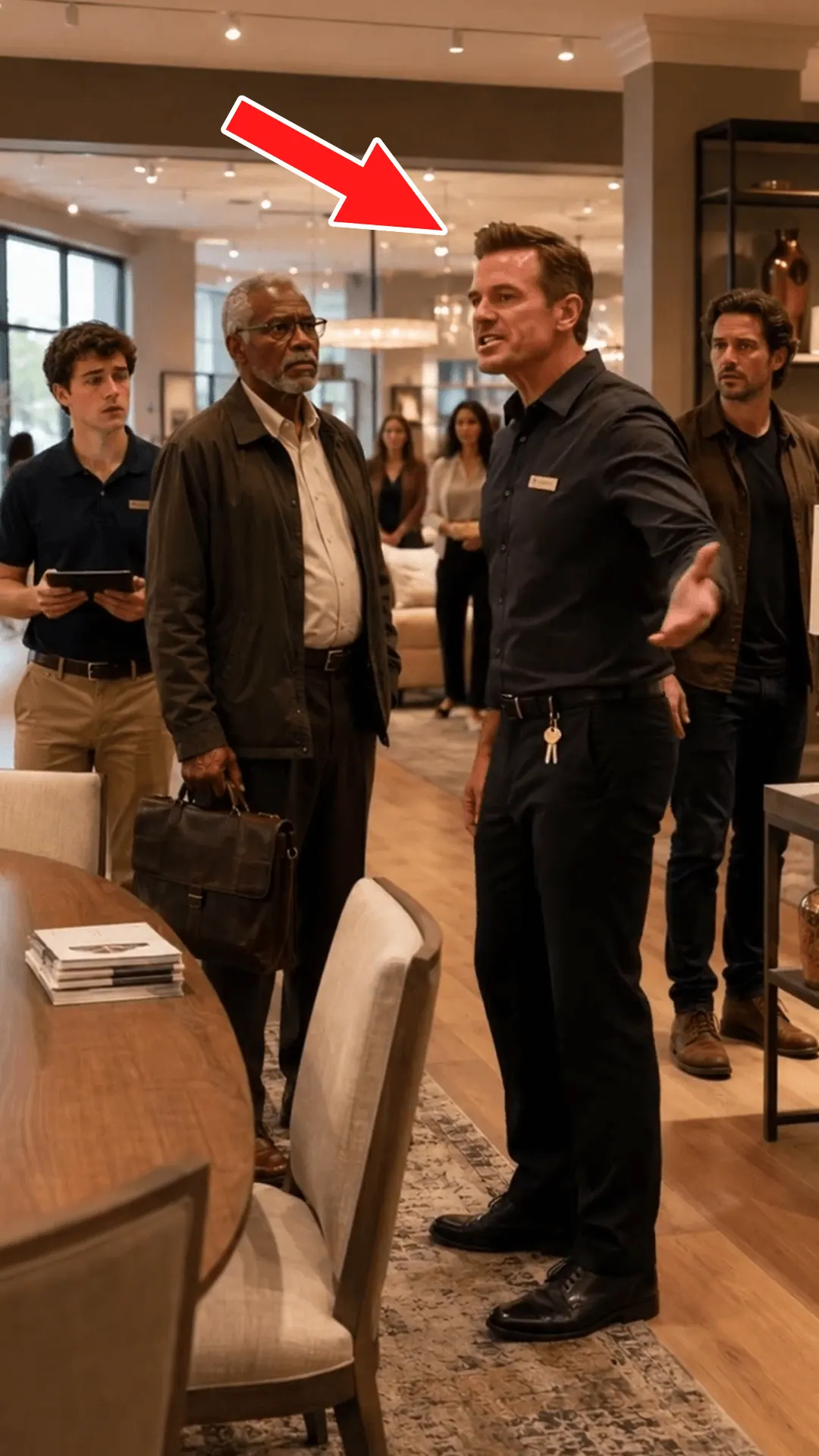
A store manager wearing a black button-down shirt extends his hand toward the exit and gestures for his junior associate to step away from an older man holding a leather briefcase.
The manager steps directly into the space between them, resting one hand near his belt loop while directing his colleague to redirect his attention toward high-value buyers in the showroom.
The older customer, wearing round glasses and a casual olive jacket, stands motionless beside a wooden dining table.
He grips his briefcase tightly in his left hand as he looks at the manager’s name tag.
When the older man speaks up and tells the manager that his time at the store is finished, the manager blinks twice in surprise before letting out a brief laugh.
The manager asks how someone who does not work in the store could fire anyone, shifting his weight back onto his heels.
The customer quietly confirms that he does not work on the floor, keeping his posture upright and his gaze focused on the manager.
Questioning The System
The manager turns to the young associate holding a tablet and nods toward the front door, commanding him to escort the customer out immediately.
Instead of turning to leave, the older gentleman asks whether the manager always judges a person’s worth simply by looking at their clothing.
The manager raises his eyebrows, arguing that he knows exactly who intends to buy and who is simply wasting company time.
He spreads his arms wide toward the floor display, declaring that he runs the store and does not need customers telling him how to manage staff.
The older man unzips his leather briefcase and reaches inside while listening to the manager defend his sales philosophy.
The manager asserts that associates are instructed never to spend an hour with a customer who will not spend a dollar.
A Revealed Identity
The young associate steps closer, holding his tablet against his stomach, and admits to the customer that employees are routinely instructed to turn away non-commissioned visitors.
The older customer pulls three printed white documents from his briefcase and presents them directly to the manager.
He points to the official headers on the pages, noting that these are three documented customer complaints citing the exact same behavior under this manager’s supervision.
The associate looks down at the papers and recognizes one of the specific incidents, confirming he was standing ten feet away when it occurred.
Before the manager can respond, a woman in a dark business suit approaches the group while carrying a brown leather folder under her arm.
She steps beside the older gentleman and addresses him directly as Mr. Mercer, handing him an updated internal file.
She turns to the manager and explains that Walter Mercer is the founder who established the entire retail enterprise.
Handing Over The Keys
The manager takes a step backward, his hands dropping to his sides as he looks between the founder and the corporate officer.
The executive reminds the manager that he received two prior written warnings regarding his practice of dismissing potential customers.
The manager stammers an apology, asking for one last opportunity to correct his behavior on the floor.
Mr. Mercer shakes his head, explaining that those previous warnings were his opportunities, and today demonstrated that nothing had changed.
The executive extends her hand, prompting the manager to unclip the brass key ring attached to his trousers and hand it over.
The manager turns to the associate, acknowledging that he repeatedly placed him in an unfair position.
Mr. Mercer asks the young associate what he would like to do now that the manager has stepped down.
The associate lifts his tablet, steps alongside Mr. Mercer, and points to the screen as they begin reviewing the store inventory together.
Know someone who has been underestimated based on appearance? Share this story with them today.