
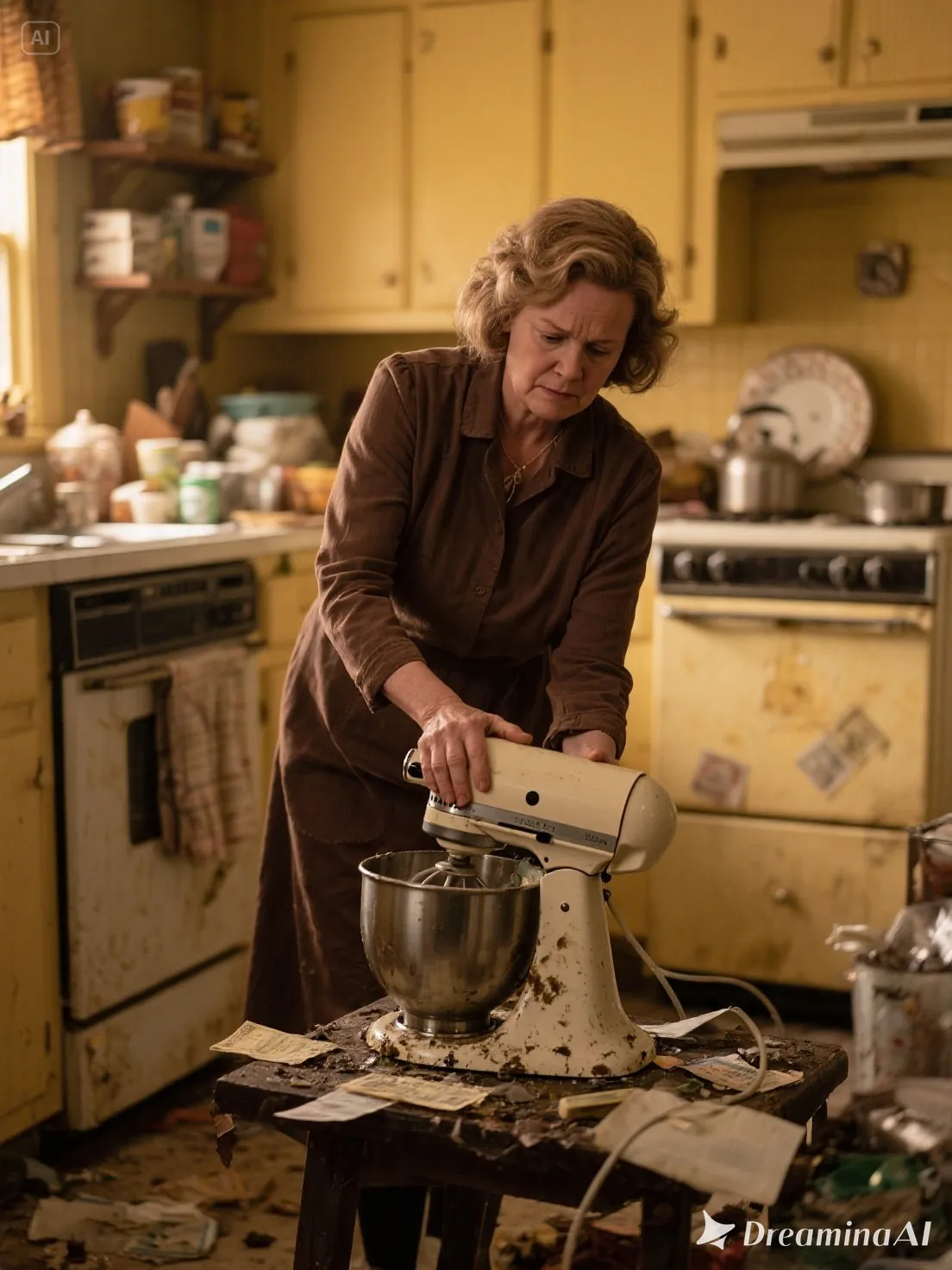
My neighbor Denise had borrowed nearly ten things from me since the beginning of the year.
It started in spring with my ladder.
Then came the pressure washer.
After that, she slowly worked her way into my kitchen—my crock pot, my steamer, a cooler, and even my good roasting pan.
Things always came back late.
Sometimes they were dirty.
Sometimes a lid was missing.
And not once did she apologize or even mention it.

Then, last Tuesday, she asked to borrow my mixer.
It was an old cream-colored KitchenAid—the heavy kind that seems built to survive forever. My mother had bought it in 1989 and used it every Sunday until she became too weak to stand for long periods.
It was one of the few things she had left behind that I still used.
So this time, I said no.
Actually, I said it clearly.
“Denise, I’d rather not lend that one out. It belonged to my mom.”
She laughed as if I had just told her a joke.
“I’ll be extremely careful. I only need it for one cake.”
She didn’t leave.
My daughter was sitting on the porch steps, watching us.
And somehow, I heard myself give in.
“Fine.”
Saturday morning, I found the mixer sitting on my porch.
Denise hadn’t knocked.
She hadn’t handed it back to me.
She had simply left it on the wooden boards beside the doormat, where anyone passing by could have picked it up.
Cream-colored batter had dried deep inside the seam where the head met the body.
It was yellow, cracked, and obviously several days old.
She hadn’t even bothered washing it.
I plugged it in.
The motor made a sound I had never heard in thirty-six years.
I immediately pulled the plug.
For several seconds, I stood there with my hand still resting on the switch.
Then I crossed the lawn and knocked on Denise’s door.
I wasn’t even angry yet.
Honestly, I thought she might have been embarrassed and simply didn’t know how to face me.
Maybe that’s why she’d left it outside.
She opened the door holding a cup of coffee.
“Oh—yeah,” she said casually.
“Honestly, you should just buy a new one. That thing is ancient.”
She took another sip.
“It stopped halfway through my cream, and I had eleven people sitting in my dining room with no cake.”
Then she shrugged.
“So thanks for ruining my night, I guess.”
I stared at her.
And in that moment, something finally clicked.
She wasn’t embarrassed.
She wasn’t sorry.
She didn’t even think she’d done anything wrong.
She had broken something that belonged to my mother, left it filthy on my porch, and somehow decided the inconvenience was my fault.
I walked home without saying another word.
The next morning, I woke up early.
And before I finished my coffee, I already knew exactly what I was going to do.
I wasn’t going to yell.
I wasn’t going to threaten her.
I was going to teach Denise a lesson she wouldn’t forget.
PART 2 – THE LESSON
The next morning, I drove to the repair shop.
I needed to know whether Denise had actually destroyed my mother’s mixer or whether I was simply being sentimental about an old appliance.
The technician was an older man named Greg.
He turned the mixer over, removed the housing, examined the motor, and frowned.
“What were you mixing?”
“I wasn’t. My neighbor was.”
He looked at me.
Then back at the machine.
“Ah.”
That single word told me he’d heard this story before.
“What happened?”
He pointed toward the motor.
“It overheated.”
“Because it’s old?”
“Not exactly.”
He shook his head.
“Something this heavy-duty doesn’t just fail because it’s thirty-six years old. Whoever was using it overloaded the motor and kept running it after it started struggling.”
My stomach tightened.
“So she broke it.”
“She didn’t just use it hard,” Greg said. “She kept pushing it after the machine was clearly telling her to stop.”
“How much to repair?”
He gave me the estimate.
Three hundred and forty-seven dollars.
I took a photograph of the damaged motor and sent it to Denise.
The repair shop says the motor was damaged by overloading and continued use. The repair will cost $347. Please send me the money.
Her response arrived twenty minutes later.
LOL. Absolutely not.
Then another message appeared.
I’m not paying $347 for a mixer from the 80s.
And finally:
You should be thanking me for giving you an excuse to buy a new one.
I stared at the screen.
My daughter Sophie was standing behind me.
She read the message.
“Mom?”
“Yes?”
“Can I say a bad word?”
“No.”
She thought for a moment.
“Can I think one?”
I laughed despite myself.
“Absolutely.”
That afternoon, I paid the repair bill.
Not because Denise deserved to get away with it.
But because my mother’s mixer wasn’t going to become another thing I’d lost because I was afraid of confrontation.
Then I did something else.
I made a decision.
For six years, I’d confused being a good neighbor with being an unlimited resource.
That was going to end.
Three days later, Denise appeared at my door.
“Hey, neighbor!”
She smiled.
I smiled back.
“I need to borrow a few things.”
Of course she did.
“The big cooler, your crock pot, and those folding tables.”
I nodded.
“Sure.”
Her face brightened.
Then I added,
“There’s just one condition.”
She stopped.
“What?”
I went inside and returned with a clipboard.
Her smile disappeared.
“What is that?”
“A lending agreement.”
She laughed.
I didn’t.
I had listed every item she wanted.
The replacement value.
The return date.
The cleaning requirements.
And a refundable security deposit.
At the bottom was one additional line.

Outstanding balance: $347 – KitchenAid mixer repair.
Denise stared at the page.
“You cannot be serious.”
“Completely.”
“You want me to pay nearly seven hundred dollars just to borrow some tables and a cooler?”
“No.”
I pointed to the numbers.
“Three hundred and fifty is a refundable deposit. The other three hundred and forty-seven is what you owe me.”
Her face reddened.
“This is ridiculous.”
“Then don’t borrow anything.”
She stared at me.
“You’ve never done this before.”
“I know.”
“Why now?”
I looked her directly in the eyes.
“Because you taught me that I need to protect my belongings.”
She scoffed.
“I always bring your stuff back.”
“Eventually.”
“I’ve never stolen anything.”
“I didn’t say you did.”
“Then what’s your problem?”
I took a breath.
“My problem is that you borrowed something that belonged to my mother, broke it, left it dirty on my porch, and blamed me for your ruined party.”
Her expression changed.
Only slightly.
But I saw it.
“You’re still upset about that?”
“Yes.”
“It was just a mixer.”
“No.”
I shook my head.
“It was my mother’s mixer.”
Silence.
For the first time, Denise looked uncomfortable.
Then she grabbed the clipboard.
“Fine.”
She signed.
She paid the deposit.
And I handed her the things she needed.
I didn’t gloat.
I didn’t make a speech.
I simply watched her carry the tables across the lawn.
The party happened that weekend.
Cars filled her driveway.
Music played until late evening.
I stayed out of it.
Sunday at exactly 4:20 p.m., Denise knocked on my door.
Everything was returned.
The cooler was washed and completely dry.
The crock pot was spotless.
The tables were folded exactly as I’d given them to her.
Even the drink dispenser she’d asked for at the last minute was clean.
I inspected everything.
Then I handed her the deposit.
She looked at the check.
“Where’s the rest?”
“The rest?”
“The mixer money.”
I shook my head.
“That went to the repair shop.”
She stared at me.
Then she looked down at the check again.
“You’re really keeping it?”
“No.”
I smiled.
“The repair shop is.”
She didn’t say anything.
For several seconds, she just stood there.
Then her shoulders dropped.
“You know…”
She looked toward my house.
“I really thought the mixer broke because it was old.”
“It probably would’ve lasted another decade.”
She sighed.
“I shouldn’t have kept running it.”
“No.”
“And I shouldn’t have left it dirty.”
“No.”
“And I definitely shouldn’t have blamed you.”
I waited.
She looked embarrassed.
Then finally said the words I’d been waiting to hear.
“I’m sorry.”
It wasn’t dramatic.
There was no audience.
No grand apology.
Just four simple words.
But they meant more than anything else she could have said.
“Thank you,” I replied.

She nodded and walked away.
Two days later, Greg called.
“The mixer is ready.”
I drove straight to the repair shop.
When Greg plugged it in, the motor came alive with the same smooth hum I’d heard for decades.
I closed my eyes.
For one second, I was back in my mother’s kitchen.
Sunday morning.
Fresh bread.
Coffee.
That familiar sound coming from the counter.
When I opened my eyes, Greg was smiling.
“She’s got plenty of life left.”
I laughed.
“That’s good to hear.”
That weekend, Sophie and I made my mother’s old chocolate cake.
She measured the flour.
I turned on the mixer.
The motor hummed.
Sophie smiled.
“Sounds like Grandma’s kitchen.”
I looked at her.
“It does.”
And suddenly, I understood why I’d fought so hard to save an old machine.
It wasn’t really about the mixer.
It was about memory.
It was about my mother.
It was about refusing to let someone else’s carelessness decide what pieces of her I was allowed to keep.
Denise never asked to borrow it again.
Actually, she stopped borrowing almost everything for a while.
Then, months later, she knocked on my door.
“Do you still have the pressure washer?”
“Yes.”
She sighed.
“Do you still have those forms?”
I smiled.
“Absolutely.”
She rolled her eyes.
“Fine.”
She signed one.
And when the pressure washer came back, it was spotless.
On time.
With a full tank.
I didn’t say anything.
Neither did she.
We didn’t need to.
Sometimes the best lesson isn’t revenge.
It isn’t humiliation.
It isn’t making someone suffer.
Sometimes it’s simply making people understand that your kindness has boundaries.
And that other people’s belongings don’t become worthless just because they belong to someone who is nice enough to lend them.
As for my mother’s mixer?
It’s still sitting on my kitchen counter.
Same cream color.
Same scratches.
Same little chip in the enamel.
And every Sunday morning, when I switch it on, I hear something that Denise could never break.
My mother’s memory.