
A Sudden Encounter in the Hallway
Dr. Marcus Reed scribbled his name across a stack of medical records without raising his eyes from the desk.
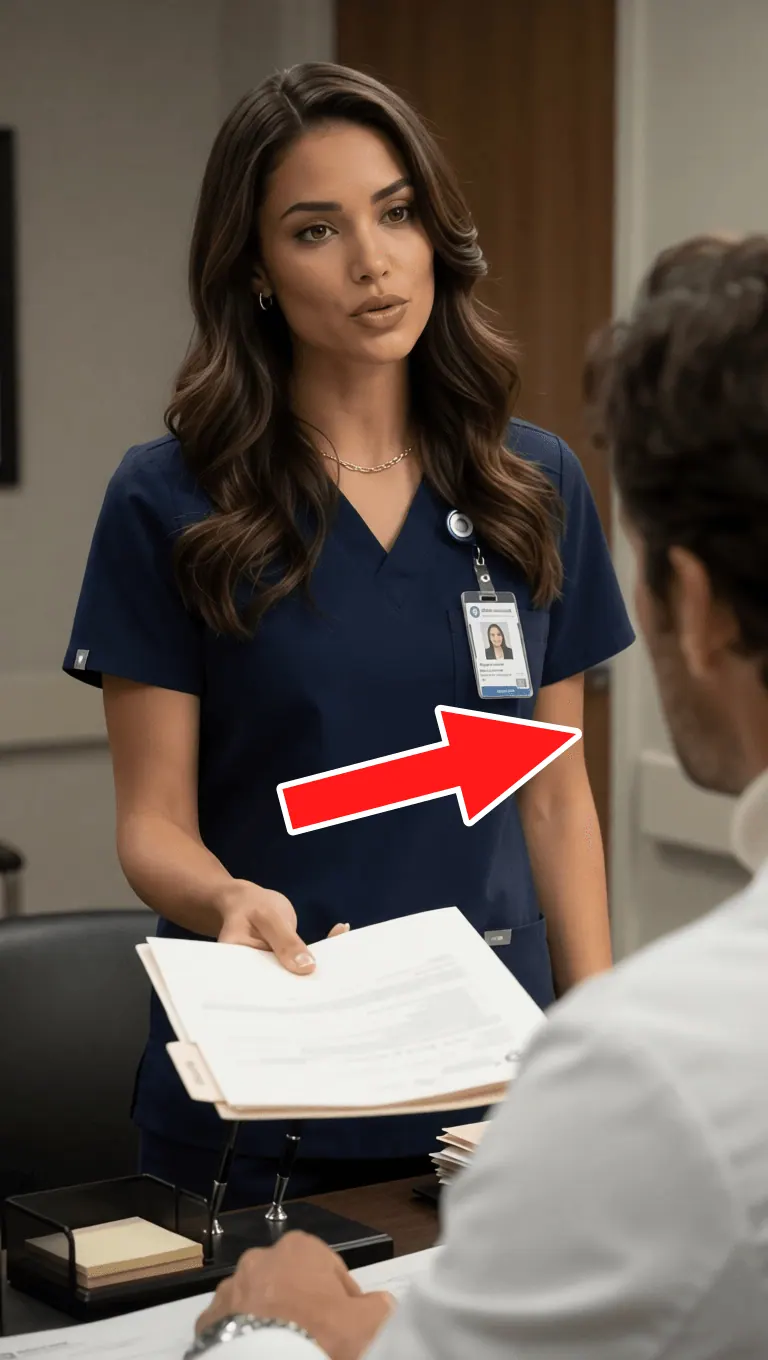
His assistant stood near the office doorway holding a brown folder, requesting a signature for the multi-million dollar surgical wing proposal.
Marcus motioned toward the corner of his desk and told her to set the papers down without stopping his pen.
She tried to explain that the executives needed the signed document before the morning meeting began.
Marcus set his pen down firmly, lifted his head, and instructed her to leave the folder where it was.
Across the corridor, an elderly man in navy blue denim overalls pushed a metal bucket down the center of the hallway.
His silver nametag read Samuel, and his hands gripped the wooden handle of a mop as staff members in green scrubs hurried past him.
Nobody slowed down to greet him or acknowledge his presence as he worked near the glass doors.
When Marcus stepped into the corridor carrying his leather briefcase later that evening, his coat buttoned against the chill, Samuel stopped mopping.
Samuel called out to the physician, holding a yellowed envelope in his right hand.
Marcus stopped in his tracks, turning his head as Samuel stepped closer and held out the envelope.
The Vintage Photograph Inside
Marcus took the paper, his eyebrows pulling together as his thumb traced the dark ink across the front of the envelope.
He recognized the sharp, slanted script immediately as his father’s handwriting.
Samuel explained that he had spotted the paper tucked under a wooden chair in the waiting room earlier that afternoon.
Marcus unsealed the envelope and pulled out a black-and-white photograph with worn, deckled edges.
The image showed a tall man in a dark suit standing beside a young man wearing high-waisted trousers and suspenders.
Marcus held the print closer to his eyes, his brow furrowing as he scanned the faces from decades ago.
He shifted his head toward Samuel, asking where the picture had come from and why it was in the hospital.
Samuel looked down at the polished floor tiles before meeting the doctor’s gaze again.
He stated that Marcus’s father had given the photograph directly to him many years prior.
Marcus pointed at the picture, stating his father had never once mentioned Samuel’s name or spoken about this photo.
Samuel rested both hands on the top of his mop handle and offered a faint smile, explaining that the past often remains unspoken.
Marcus flipped the photograph over to check the blank reverse side.
Written in dark blue ink near the top border was a single handwritten line: Samuel kept me alive when I had nothing.
A Story from the Past
Marcus looked up from the card, his lower lip tightening as he asked Samuel what those words meant.
Samuel lowered his head slightly and exhaled before explaining the origins of the photograph.
He recounted how Marcus’s father had been a struggling medical student working inside the same facility thirty years earlier.
Late one winter evening, after working thirty consecutive hours in the emergency department, the young student collapsed against a wall in the hallway.
Samuel had been cleaning the corridor when he found the exhausted student slumped on the floor without enough change in his pockets to buy dinner.
Samuel had reached into his own lunch bag, pulled out his meal, and handed it across the floor to the young man.
Marcus stared at the janitor’s weathered face, his thumb pressing hard against the corner of the photograph.
He asked why his father had never told him that a janitor had fed him during his hardest days.
Samuel shrugged his shoulders gently, suggesting his father wanted Marcus to focus on building a career without measuring worth by wealth.
Marcus recalled the phrase his father used to repeat to him during his youth about paying attention to the people who work in the background.
He glanced toward the heavy wooden doors at the end of the hall where the board members met each morning.
Standing Before the Executive Board
The following morning, six hospital executives sat around a polished mahogany conference table covered with architectural blueprints.
Each man held a gold pen, ready to sign off on the funding for the luxury surgical expansion.
Marcus walked into the glass-walled room carrying the black folder from his desk.
He placed the thick stack of papers in the middle of the table without opening the cover.
He announced to the room that he wanted to modify the proposal before any signatures were added.
The executives adjusted their glasses and leaned back in their leather chairs, staring at the doctor in silence.
Marcus pointed toward the glass wall looking out over the busy hospital corridor.
He stated that before building a new wing, the hospital needed to establish an emergency assistance fund for the support staff, cleaners, and maintenance workers.
The senior board member sitting at the head of the table frowned, pointing out that support staff funding was not part of the master plan.
Marcus looked through the glass partition where Samuel was quietly wiping down the outer glass doors with a cloth.
Marcus stated that a hospital relies on every person inside its walls, not just the physicians carrying scalpels.
The executive at the head of the table unclasped his hands and adjusted his tie while looking down at the revised paperwork.
Years later, standing at a wooden podium in a brightly lit auditorium, Marcus straightened his dark jacket in front of a bank of news cameras.
A reporter held a microphone up toward him, asking who had influenced his approach to leadership and medicine.
Marcus leaned into the microphone, stating his career was guided by a man who gave away his last meal while carrying a mop down a quiet hallway.
Down the long corridor of the hospital, Samuel walked away from the camera, carrying his mop resting balanced over his right shoulder.
Share this with someone who deserves to be recognized for their hard work today.